
 VocalsSound design
How A Talkbox Plugin Works Without A Tube
A talkbox plays a carrier through the shape of your mouth. What that means inside a plugin, and why you do not have to load a synth first.
VocalsSound design

Both make an instrument talk. One uses your mouth as the filter, the other uses your voice as a control signal.
They get filed together because they produce the same effect: an instrument that appears to speak. Underneath, they have almost nothing in common. One is acoustic and happens in your mouth. The other is analysis and happens in a filter bank. Knowing which is which is the difference between getting the sound and fighting the tool.
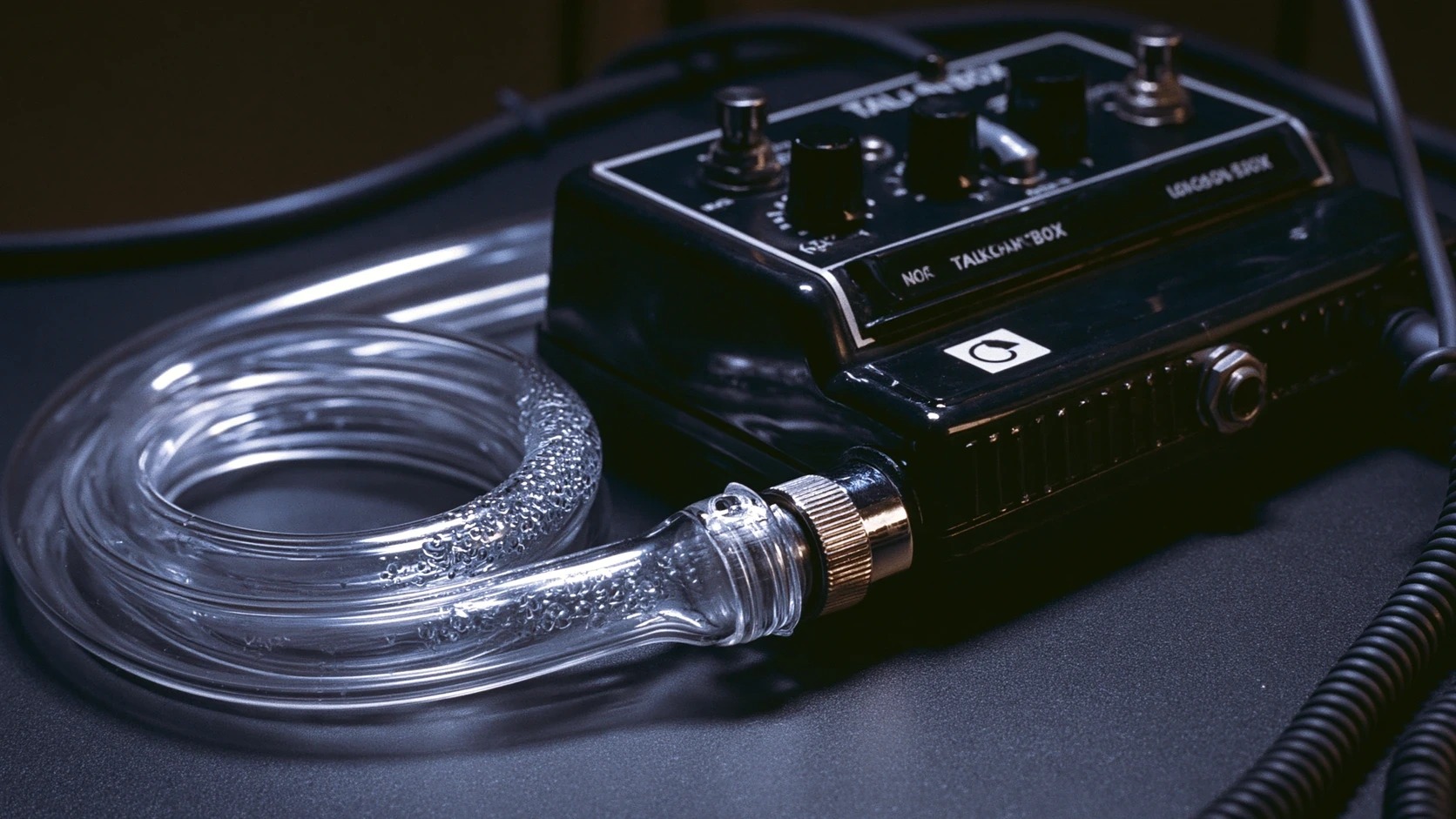
A driver takes the instrument's signal and sends it up a plastic tube into your mouth. Your mouth shapes it the same way it shapes your own voice: tongue position, jaw, lips. A microphone in front of your face picks up the result.
Your vocal cords are not involved. You mouth the words silently; the pitch comes entirely from the keyboard. That is the part people get wrong most often, and it is why singing along makes the effect worse rather than clearer.
Your voice goes into a bank of filters that splits it into frequency bands and measures how much energy is in each one, moment by moment. Those measurements become an envelope for each band. The same band structure is then applied to a carrier signal, usually a synth.
Your voice never reaches the output. Only its spectral shape does. This is why a vocoder sounds identical whether you whisper or shout the same phrase, and why the character of the result belongs entirely to the carrier.
Three names get used for the same wish, which is a vocal that sounds like an instrument. They are three different machines, and only one of them is about tuning at all.
A saw or a pulse wave, ideally a detuned stack, gives the filter bank something to work with across the whole spectrum. Rich carriers speak; pure ones mumble.
Say it, do not sing it, and exaggerate every mouth shape. Both techniques throw away a lot of the cues that make speech intelligible, so you have to supply more of them than feels natural.
Blend a small amount of the dry voice, high-passed so only the sibilance and transients come through. It restores the consonants without breaking the illusion that the instrument is doing the talking.
Both techniques get dramatically more legible with wide, sustained chords than with a moving single-note line. Space between notes is where the phrase falls apart.
The talkbox reads as human because it is: the resonances moving through it are an actual vocal tract. It suits lead lines that need to feel performed, and it carries the imperfection that makes them feel that way.
The vocoder reads as machine, and it is far better at chords, at holding a phrase perfectly steady, and at being recalled six months later exactly as it was. Choose based on which of those two characteristics the track needs, not on which one is easier to set up.
The hardware talkbox is a driver, a length of plastic tube in your mouth and a microphone in front of your face, and that is the part that keeps most producers out of it. A plugin can model the driver and the mouth. Most of them still ask you for the carrier, which means loading a synth, routing or printing it, and only then finding out whether the phrase works.
PRISM PRO is a talkbox, not a vocoder, and it ships with the carrier already inside. It goes on the vocal track as an audio effect, follows the pitch of the voice it hears, and holds every decision it makes inside the key you set. Up to three harmony voices pass through the same gate as the lead, so across all three of them out of scale notes measure zero. The longer version is in two guides: how a talkbox plugin works without a tube, and what scale locked harmony is actually doing.

PRISM PRO carries its own carrier and keeps the line, and the harmony, inside the key you set. Seven day trial, no card, plugins only.
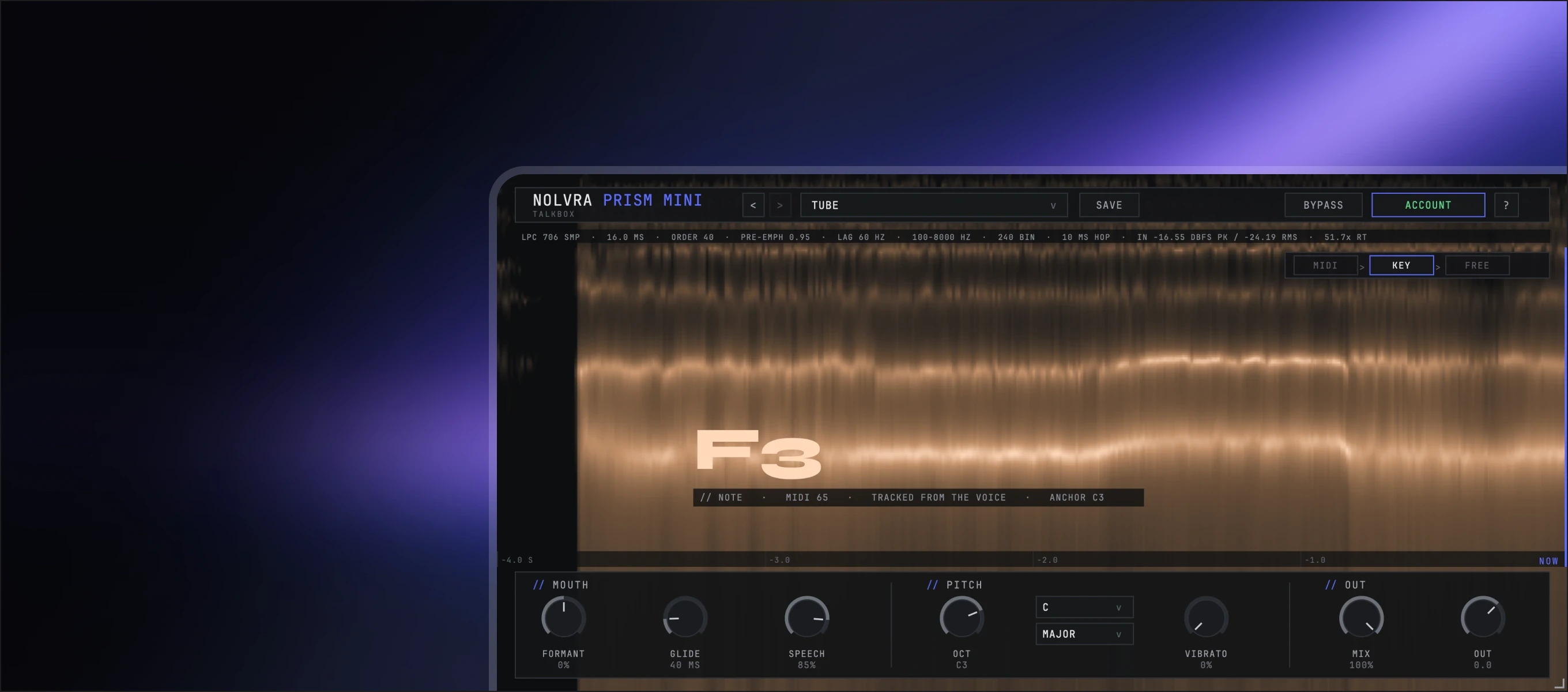
A talkbox with the carrier inside, free through the Nolvra Hub.
A talkbox is acoustic and a vocoder is analysis. The talkbox sends an instrument's signal up a tube into your mouth, and your tongue, jaw and lips filter it the same way they filter your own voice; a microphone picks up the result. A vocoder never lets your voice reach the output: it splits the voice into frequency bands, measures the energy in each one, and applies that shape to a carrier synth.
No, you mouth the words. Your vocal cords are not involved and the pitch comes entirely from the instrument playing through the tube. Singing along makes the effect worse rather than clearer, and that is the part people get wrong most often. The same is true of a vocoder: in both cases the melody is played, not sung.
Almost always the carrier. Both techniques can only shape energy that is already there, so a sine wave has nothing in most bands to move and comes out as a mumble. A saw or a pulse, ideally a detuned stack, gives the whole spectrum something to work with. The second cause is consonants: unvoiced sounds have no pitch, so blend a little of the dry voice back, high passed, and the S and the T return.
The talkbox reads as human, because the resonances moving through it are an actual vocal tract, so it suits lead lines that need to feel performed. The vocoder reads as machine and is far better at chords, at holding a phrase perfectly steady, and at being recalled six months later exactly as it was. Choose on which of those two the track needs, not on which is easier to set up.
Guides
You may also like
VocalsSound designA talkbox plays a carrier through the shape of your mouth. What that means inside a plugin, and why you do not have to load a synth first.
 VocalsSound design
Yes, free talkbox plugins exist. Five that install today, what each one actually does, and the routing and feature gaps their download pages skip.